Health Tech
Last Updated
Jun 10, 2026
Table of contents
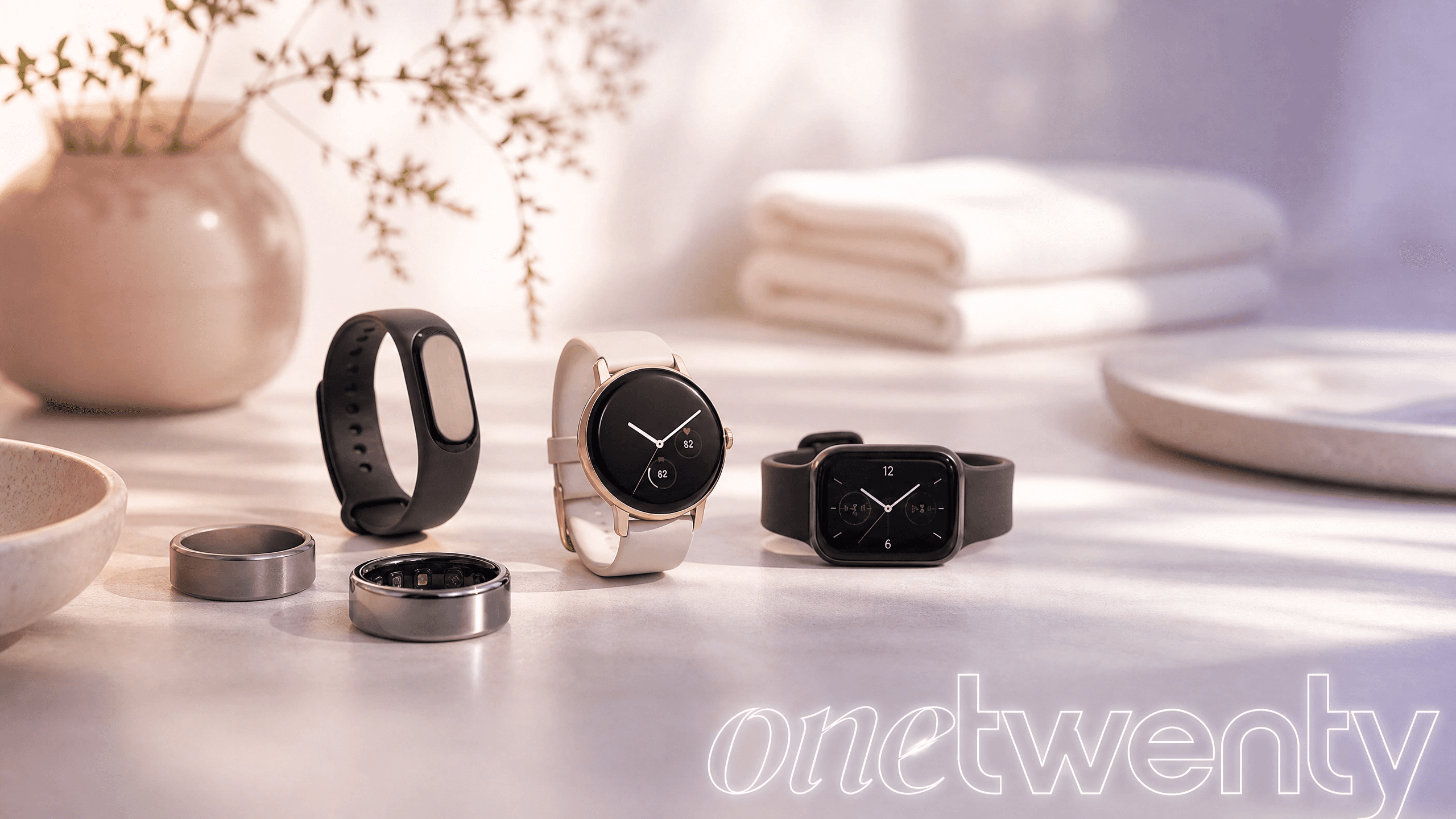
Most wearables are built to count your steps. A handful are built to help you live longer, and that distinction matters more than most people realize.
The longevity conversation has gone mainstream. Physicians like Peter Attia and researchers like David Sinclair brought healthspan, metabolic flexibility, and biological age into everyday language, and wearable technology evolved alongside them. The best devices no longer just track activity. They monitor heart rate variability, sleep architecture, recovery readiness, skin temperature, and even real-time blood glucose. With hundreds of options on the market, most people end up over-tracked and under-informed. This guide cuts through the noise with the devices that actually matter if your goal is to live longer with more control over the metrics that drive aging, updated for the 2026 lineup.
The criteria
What makes a wearable good for longevity?
Longevity is not about logging 10,000 steps. It is the result of optimizing across several pillars: sleep quality, cardiovascular fitness, metabolic health, stress, and recovery. The best longevity wearables do three things well.
Side by side
The 2026 longevity wearable comparison.
Prices and models reflect the current 2026 lineup. The CGM column covers over-the-counter consumer sensors, which now sell without a prescription.
| Feature | Oura Ring 5 | WHOOP 5.0 | Apple Watch Ultra 3 | Garmin Fenix 8 | CGM (Stelo / Lingo) |
|---|---|---|---|---|---|
| Price | $399 + $5.99/mo | $199 to $359/yr (device included) | $799 (Series 11 from $429) | $849.99 to $999 ($1,199+ for 8 Pro) | ~$83 to $99/mo |
| Form factor | Ring | Screenless band | Smartwatch | Sports watch | Arm sensor |
| Battery life | ~7 to 8 days | 14+ days | ~2 to 3 days | 16 to 28 days | ~15 days per sensor |
| Sleep tracking | ★★★★★ | ★★★★★ | ★★★☆☆ | ★★★★☆ | N/A |
| HRV monitoring | ★★★★★ | ★★★★★ | ★★★★☆ | ★★★★☆ | N/A |
| Heart rate accuracy | ★★★★☆ | ★★★★☆ | ★★★★★ | ★★★★☆ | N/A |
| VO2 max tracking | No | No | Yes | Yes (most accurate) | N/A |
| ECG | No | No | Yes | No | N/A |
| Blood oxygen | Yes | Yes | Yes | Yes | N/A |
| Body temperature | Yes | Yes | Yes | No | N/A |
| Glucose monitoring | No | No | No | No | Yes (real-time) |
| Recovery score | Readiness | Recovery | No native score | Body Battery | N/A |
| Biological age | No | Yes | No | No | No |
| 24/7 comfort | ★★★★★ | ★★★★☆ | ★★★☆☆ | ★★★☆☆ | ★★★★☆ |
| Prescription required | No | No | No | No | No |
| Best longevity use case | Sleep & recovery | Strain & recovery | Heart health & ECG | VO2 max & cardio | Metabolic health |
Sources: manufacturer pricing and specifications, current 2026 lineup (Oura, WHOOP, Apple, Garmin, Dexcom Stelo and Abbott Lingo).
Why battery matters
Battery life decides what you capture.
For longevity, the data that matters most happens overnight, so a device you have to charge daily quietly costs you sleep tracking. This is the single biggest practical gap between the devices, and it has widened: WHOOP 5.0 now runs 14 or more days on a charge, while a smartwatch still needs nightly charging.
Approximate battery life per charge, or per sensor for the CGM. Source: manufacturer specifications, 2026.
1. Best overall
Oura Ring 5
If you could wear only one device for longevity, the Oura Ring makes the strongest case. The new Ring 5, which shipped in mid-2026, is thinner and lighter than the Ring 4 and stays laser-focused on the metrics that matter most for long-term health: HRV, resting heart rate, body-temperature trends, respiratory rate, and detailed sleep staging.
Sleep is arguably the single biggest lever for longevity, and Oura delivers some of the most accurate consumer-grade sleep data available, especially when you watch long-term trends rather than night-to-night noise. The Readiness Score gives a simple daily signal: push hard, or prioritize recovery. Oura has also expanded into women's health with cycle, pregnancy, and perimenopause insights, areas most competitors ignore, and added blood-test integration and cumulative stress metrics that move it closer to a clinical companion. The Ring 4 remains available at $349 if you do not need the latest hardware.
2. Best for recovery
WHOOP 5.0
WHOOP takes a different approach: no screen, no step counter, no app store. Everything is built around three scores, Recovery, Strain, and Sleep Performance, and for longevity that simplicity is a feature. The band continuously tracks heart rate, HRV, resting heart rate, respiratory rate, skin temperature, and blood oxygen, and the 5.0 generation pushed battery life past 14 days, so it rarely comes off.
What sets WHOOP apart is synthesis. The Recovery score tells you whether your nervous system is primed for exertion or needs rest, the key to avoiding the chronic overtraining that suppresses immune function and accelerates aging. WHOOP has leaned hard into longevity with a Biological Age metric and a daily behavior checklist to lower it, plus an AI coach that answers questions like how late meals affect your REM sleep. The top membership tier adds the medical-grade WHOOP MG hardware. Independent studies have found WHOOP among the most accurate wrist-worn devices for sleep, coming closest to lab equipment on total sleep time and stage detection.
3. Best smartwatch
Apple Watch Ultra 3 / Series 11
If you want a full smartwatch alongside longevity tracking, the Apple Watch remains the strongest option, particularly for cardiovascular health. It is the most accurate wrist-worn device for heart rate, and it offers clinical-grade ECG, blood oxygen, and irregular-rhythm notifications that have genuinely saved lives. The current Ultra 3 adds satellite communication and better battery than earlier models.
For longevity it shines in three areas: real-time heart rate during exercise, which is critical for staying in Zone 2, the aerobic zone Attia and others champion for cardiovascular longevity; fall and crash detection for safety; and deep integration with the Apple Health ecosystem that pulls many sources into one dashboard. The trade-off is battery. Even the Ultra 3 needs charging every couple of days, which interrupts sleep tracking unless you build a charging routine around it. For that reason many longevity-focused users pair an Apple Watch for daytime with an Oura Ring for nights.
4. Best for cardio fitness
Garmin Fenix 8 / Fenix 8 Pro
Garmin is the gold standard for endurance athletes, and its health tracking makes it equally compelling for longevity. Lab studies have consistently found Garmin's VO2 max estimates closest to clinical results, and VO2 max is one of the strongest predictors of all-cause mortality in the research. The Fenix 8 tracks training load, HRV, Body Battery, sleep stages, respiratory rate, and blood oxygen, and the Connect app rewards consistency over time.
Multi-week battery means you wear it continuously without interruption, capturing complete sleep and recovery data. For longevity, Garmin's real strength is guiding sustainable cardiovascular training: balancing intensity with recovery, building aerobic fitness progressively, and avoiding the overtraining that undermines long-term health. The newer Fenix 8 Pro adds built-in LTE and satellite connectivity at a higher price.
5. Best for metabolic health
Continuous Glucose Monitor (Dexcom Stelo / Abbott Lingo)
A CGM is not a traditional wearable, but it may be the single most impactful longevity tool on this list. These small sensors, worn on the back of the arm, measure blood glucose in real time, revealing exactly how your body responds to different foods, exercise, sleep, and stress.
That matters because chronically elevated glucose and high glucose variability are linked to insulin resistance, cardiovascular disease, accelerated aging, and cognitive decline. A CGM gives you the feedback loop to manage those risks before they become problems. The Dexcom Stelo and Abbott Lingo are now sold over the counter with no prescription, which puts CGM in reach of anyone interested in metabolic optimization. Longevity physicians routinely suggest wearing one for two to four weeks to establish your personal glucose patterns, then checking in periodically.
The shortcut
Pick by what you want to optimize.
There is no single perfect device. The right one depends on the goal you care about most.
| Your priority | Best pick |
|---|---|
| Sleep optimization | Oura Ring 5 |
| Recovery and strain | WHOOP 5.0 |
| Heart health and ECG | Apple Watch Ultra 3 |
| VO2 max and cardio fitness | Garmin Fenix 8 |
| Metabolic health | CGM (Stelo or Lingo) |
Many longevity-focused people layer two or three: a ring for sleep, a watch for exercise, and a periodic CGM for metabolic check-ins. The key is choosing devices that give you data you will actually act on, not just more numbers to look at.
The bigger picture
Devices are tools, not treatments.
Wearables are powerful, but the real value comes from what you do with the data: adjusting training, improving sleep, changing how you eat, and managing stress. A single device shows you a slice. The bigger gains come from connecting those signals to lab work, expert interpretation, and a plan, so the raw metrics turn into a real longevity strategy rather than another dashboard you stop checking.
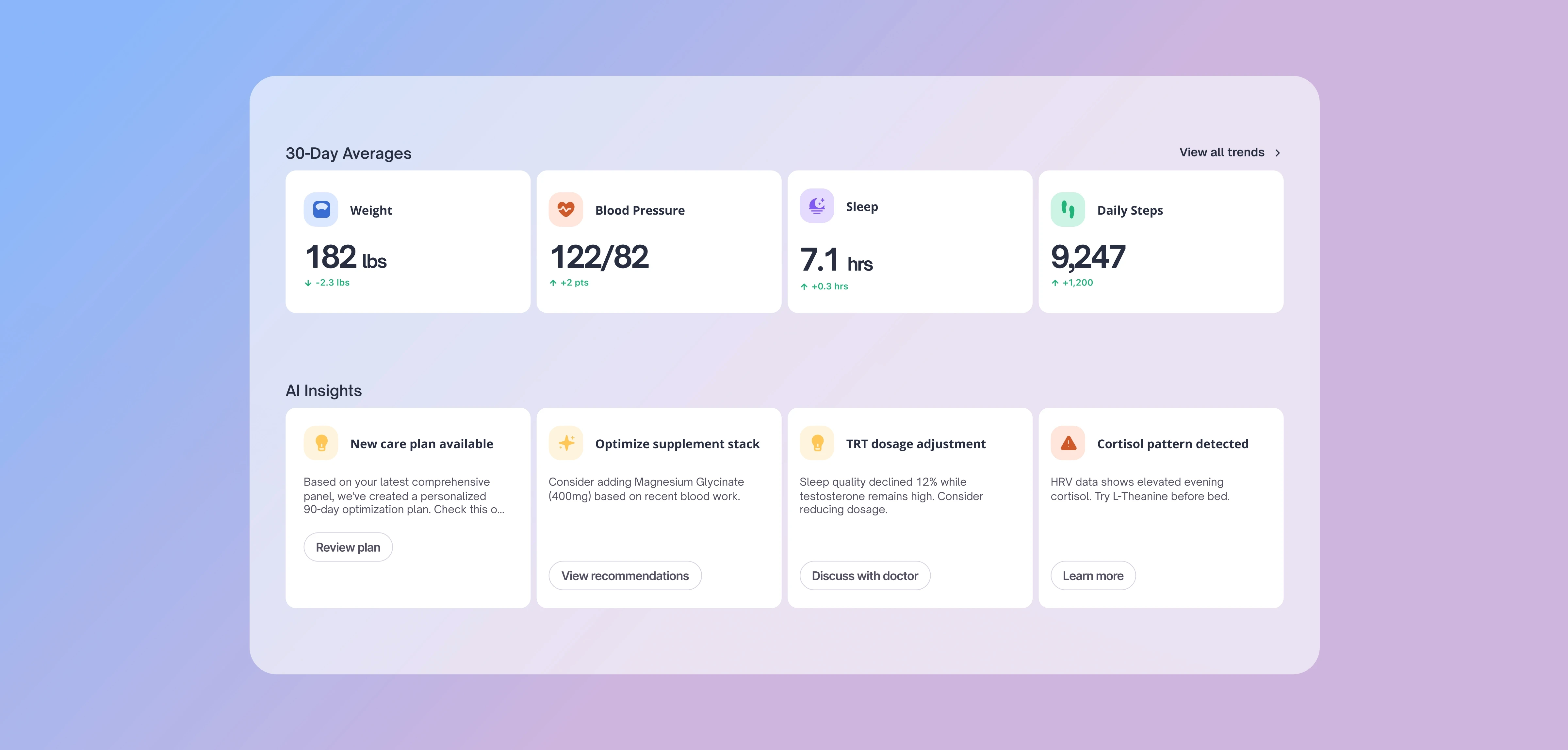
The future of health optimization is not more devices. It is smarter systems that connect what your wearable sees to what your body actually needs.
Lifelong Optimization
Not your average
Checkup
Every life stage brings new biological demands. Tracking the right metrics at the right time helps you adapt, optimize performance, and extend both lifespan and healthspan.
Traditional
Manual Data Processing
Guesswork Trend Detection
Slow Campaign Setup
Multiple Tools, Multiple Logins
Reactive Decision-Making
Manual Reporting
Delayed Results
High Error Risk
Automated Data Sync
Real-Time Trend Insights
Instant AI Optimization
All-in-One Platform
Proactive AI-Driven Strategies
Auto-Generated Reports
Instant Performance Updates
AI Precision

Frequently Asked Questions
Clarity before
you commit
Answers on setup, scale, and support to remove blockers.